During lockdown I have mostly been the worst me. Worst parent, wife and family member.
My excuses? Firstly, panic over the pandemic, followed by panic about my business. Did you notice how I didn’t say worst business owner or coach? I can’t tell you how guilty I feel typing this. I was busy trying to get business in to pay the bills, because it had fallen off a cliff.
The worst me, is physically present but not available. I’m like Adam Sandler in the movie ‘Click’, where he’s on autopilot and not really in what he is in. The worst me is tense, distant, disconnected and work obsessed. The worst me finds it hard to switch off and is miserable.
There were a variety of ‘clues’, but probably the ones the stung the most involved my daughter; she decided she wanted to work somewhere else. I think the atmosphere became a bit intense in my office, even with Alexa playing spa music and the diffuser wafting out scents which were supposed to ‘soothe’ whilst also ‘focus’ didn’t soften the mood sufficiently. He heee. On reflection I probably had the oils working against each other.
Then at dinner she said that she messaged her teacher to ask a question because, ‘She didn’t want to disturb me’. That broke my heart. My immediate thought, I’ve only got one child! What about those parents home-schooling more than one? I’m sat here wincing as I type this. Sometimes I can be hyper-focussed. A blessing and a curse. Or maybe it is the oil?
The cherry on the cake is that I have just written a book on how to not be like this. How not to burn out. How to keep work and life in balance so that you perform brilliantly, ‘shine’ and access the joy of work-life. I was miserable.
Confession over.
I took my own advice and found my way back. Here’s how you can too:
1. Stop. One of my life motto’s is: We have to live life in the space in between [work]. According to Parkinson’s Law, ‘Work expands so as to fill the time available for its completion’. We will always have things to do, (that’s one of the things I find exciting about life – we don’t ever have to get bored). Working from home can blur our work time boundaries. It’s so easy to open the lid of your laptop or take a peek at your emails on your phone – regardless of homeworking. Make up some rules, then stick to them, e.g. no checking emails after 6 pm or at weekends.
What boundaries do you need in place? What are your opportunities for stopping so that you can live life a bit more?
2. Go Green For 2 Hours A Week. Skimping on my walks is always a sure sign that I’m out of balance. Another of my favourite things is to be in the countryside with my family and dogs. Being in the woods makes me feel calm.
In a study by University of Exeter they found that ‘people who spend at least 120 minutes in nature a week are significantly more likely to report good health and higher psychological wellbeing than those who don\’t visit nature at all during an average week.’
3. Plug In. Whilst I’m walking, I’m using all my senses. This helps me to get out of my head and reconnect with what is in front of me.
I love to hear my daughter empty her brain, just mindlessly and unconsciously chattering, often with the birds tweeting in the background.
I love to hold my husband’s calloused gardening hand, which makes me feel safe and connected to him.
I love to look at the bits of broken pottery my daughter finds, which we put in poo bags (minus the poo obviously), take home and wash.
When, where and with whom are you not in, what you are in and want to be? Try plugging into your senses.
4. Do Things That Make You Happy. I love to cook whilst dancing to 90’s rave tunes. Cooking for my family makes me feel like I’m taking care of them. (This was another clue. My husband was doing the bulk of the meals when he got in from work, whilst I took the opportunity to do home-schooling-free work). Dancing to 90’s rave tunes, because it takes me back to my carefree days when I was offered a job as a podium dancer in Magaluf.
Which activities make you feel happy? When are you going to do more of these activities?
5. Apologise. Thank. Act. I am a big believer in saying sorry when I am wrong. I was wrong for not being fully present during family time. I was wrong to give off the unavailable vibes to my daughter. I was wrong to let work encroach on life. I sat them both down individually and explained what was going on in my head, apologised and told them specifically what I appreciated about what they had done. I thanked my husband for being my stoic, steady, rock and for stepping up and filling in the gaps which I had created. I thanked my daughter for being so mature, self-disciplined with her schoolwork and for understanding of my stressy moments. I explained what I was going to do differently and then kept my word.
What behaviours do you regret? Who do you need to speak to? What needs to be different?
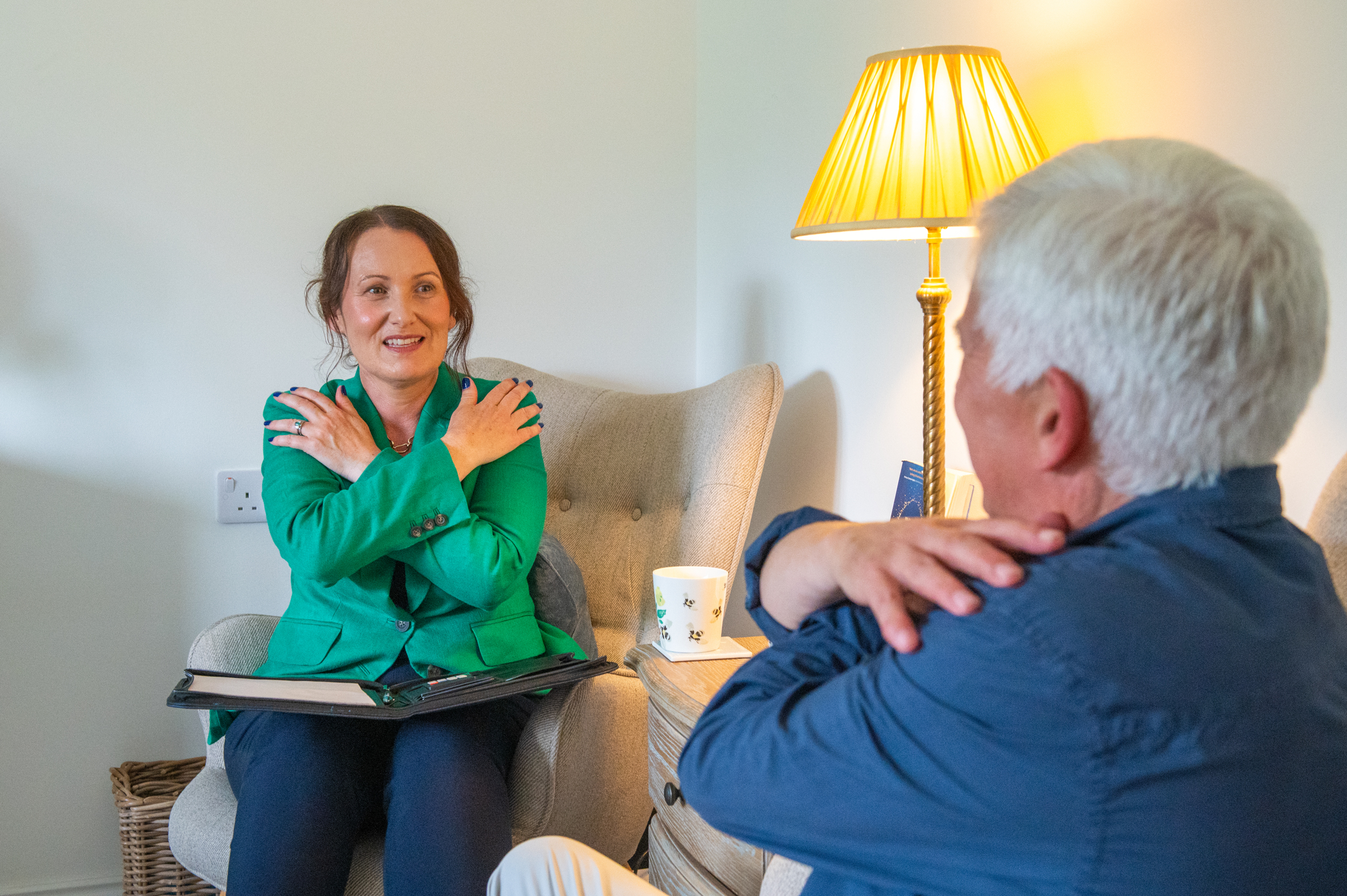
6. Give yourself a break. Be kind. Re-frame. Re-look. In a study, ‘writing about traumatic, stressful or emotional events has been found to result in improvements in both physical and psychological health’. When I give myself a hard time I journal, (you can get my free journaling template here).
I empty myself of all thoughts and feelings. I am as negative as I like, without fear of judgement, (I use a Rocketbook, which is like a whiteboard notebook, which you can upload if you want to keep your ramblings, or rub out when you are done – it’s very cathartic). Then I look at what I’ve written to establish which thoughts are unhelpful and need re-framing, i.e. to be seen from a different angle.
When I started out as a coach, I used to put myself under unnecessary pressure to have my whole work-life sorted, 100% of the time. I learnt to accept my infallibility; to embrace my weaknesses.
Often when we feel negative, we delete the good stuff, distort the truth and generalise our ‘bad’ behaviour. For example, whilst metaphorically bashing myself with a big stick, I’d conveniently deleted all the lovely lockdown moments, such as staying up until 1 am on a school night to watch the Lyrids meteor shower. It was for science – honest. We snook around in the dark, wrapped ourselves up in blankets and sat on the swing seat with hot chocolates. We didn’t see a thing, but it didn’t matter.
I’d deleted the fact that my daughter had become a more independent learner.
I’d distorted the fact that there were times when I’d stopped working altogether to deal with my daughter’s meltdowns over her schoolwork or her slow laptop.
I’d generalised and nominated myself for the category of the ‘worst mother / wife’ award because I’d let my husband make most of the meals. Seeing my husband with that same unspoken look I normally have whilst making tea which means, ‘I’ve had a really busy day, I’m trying to follow this sodding recipe, please don’t try to have a conversation with me right now.’ This helped me to be kinder to him and kinder to myself. During lockdown he’s had some insights into my role.
As I close this post, my husband has just got home from work. He’s come up to my office to get instructions for making tea. I explained that I’d written a blog about being awful during lockdown. He screwed his face up in disbelief. Clearly far worse in my head than in his. Bless him.