This is the last newsletter in the series on how to improve performance by avoiding FATS, (frustrated, anxious, tired, stressed) states of mind. We perform at our best when we are calm, happy and energised. This month I am going to turn my attention to how we attain a calmer state of mind.
Having worked with over a thousand executives I have noticed a trend in the things that prevent them from being calm:
- Being unclear about what they need to be focussing on and an absence of control and discipline. This can be as a result of being disorganised, having conflicting demands or trying to complete too many projects, goals or KPI’s at once.
- Excessive workload: the production line is going too fast with too many items on it to physically deal with. This can often be because they:
- Are not assertive or realistic about when they can deliver or they find it hard to say no.
- They like to be in control of everything…. the detail. This is physically impossible if you are at the top.
- Feeling anxious or stressed about a future event or new experience.
- Office politics: we all have unique ‘hot buttons’ and a remark can be the thing that motivates one person and damages the self-esteem of another.
- Despite being successful, on some level they still don’t believe in themselves.
I like to think of our state of mind being like a bucket. When everything is in balance and we are calm, i.e. we are neither under nor over stimulated; we are in a state of ‘homeostasis’ or balance – I imagine the bucket fill level to be at the mid-line. So what are the things that we can do to prevent the bucket from overflowing to maintain that calm state?
- We need to consciously empty our buckets and literally stop. A mini holiday every day.How do you get that inner silence and peace where you focus on nothing but the moment? Technology has changed us; I drove past several school bus stops the other morning and 85% of the children were on their phones. It can be the simplest of things:
- Looking out of the window at work and observing nature / life whilst you drink a cup of tea for 2 minutes.
- Really concentrating on your child’s/partner’s eyes as opposed to having snatched conversations.
- Getting out of your head and into your senses, i.e. really seeing, hearing, feeling, tasting and smelling. Come off autopilot.
- When you are anxious about something, if you pay attention, often there will be a negative ‘script’ or ‘movie’ you are playing in the background– usually accompanied with the question, ‘What if..?’
- Do what sports men and women do: mentally rehearse things going well. See, hear and then step into the feeling of things going the right way. Here\’s a short video on how to do this.
- Be aware of negative language and swap it for something more empowering and positive. This can feel a bit fake at first but stick with it. Positive thinking produces serotonin, (feel good neurotransmitter) and negative thinking produces cortisol the stress hormone, which slows our productivity if switched on for prolonged periods of time.
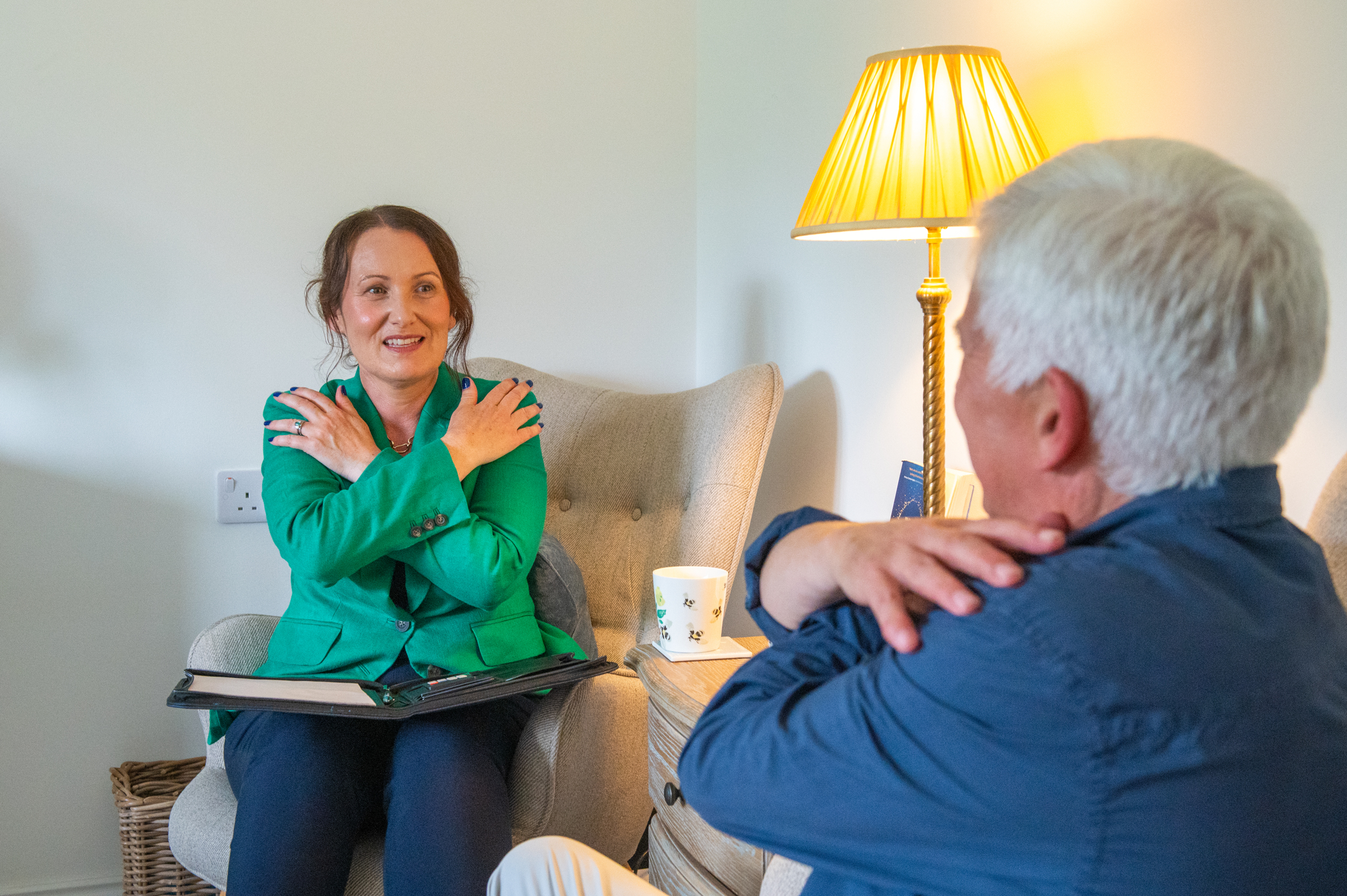
- If the ‘hot button’, anxiety or limiting belief doesn’t dissipate using positive thinking, use a technique to get rid of it. I can really recommend Havening (here’s a 2 minute video on how to do it yourself) and EFT, (Emotional Freedom Technique); this is a good book on how to use it. Alternatively, book a free sample coaching session with me.
- We can make ourselves calmer by interrupting our fight or flight system and taking charge of our breath. Try this exercise:
- Inhale through your nose for a count of 7
- Exhale through your mouth for a count of 11
- Repeat 10 – 20 times
- Get a mindfulness app, (I could have misjudged it; the kids may have been meditating at the bus stop!). I have seen studies that prove meditation can improve concentration, decision making and your overall state of wellbeing. I can recommend an app called ‘Mindful’. You can also find other recommendations here.
- Get back in control of your production line and be more personally effective by:
- Making a list of everything that represents work, i.e. post-its, messages, emails etc. and then tidy up. Then maintain this daily discipline.
- Reminding yourself of why you are employed. What’s most important? What’s crucial?
- Ditching or delegate any tasks that don’t deliver the above.
- Saying no to tasks that don’t deliver the above.
- Prioritising.
- Giving realistic timelines to your customers; better to over-deliver than under.
- Booking slots in your diary with yourself to complete the big jobs. This will slow the pace of your production line.
- Learning to focus. Multi-tasking is so passé; it damages grey cells. Successful people are able to mono-task. I can recommend this book.
Personal Effectiveness Programme
Our Personal Effectiveness Programme is targeted at middle-management / up and coming talent and is designed to enhance employee performance by:
- Reducing stress and getting them to take responsibility for their wellbeing, because too much stress slows down productivity.
- Enhancing confidence and self-esteem so that they dare to do things that they wouldn’t ordinarily do in the workplace, that will advance their career.
- Improving their emotional intelligence so that they better influence their own state of mind, but also the states of those they work with, resulting in much more harmonious relations.
- Making them more efficient by being better organised and focussed on the most important aspects of their role.
- Getting them to assert themselves at work, so that they don’t get drawn into unnecessary tasks and are able to delegate.
- Challenging them to think more commercially about their role and to identify opportunities for business development.
- Teaching them how to present their ideas / products / services in an interesting and commanding way.
- Holding them to account each month to a series of challenges and actions so that they apply the learning to the workplace.
We provide specific feedback on actions taken following each session. This can be useful for highlighting your future ‘stars’.
The programme is flexible and we can add or remove elements of the course to suit your organisation.
Find out more here or get in touch: estelle@2beee.com or t: 0845 838 5955.